
Undiscovered Mineral Resources of the Country
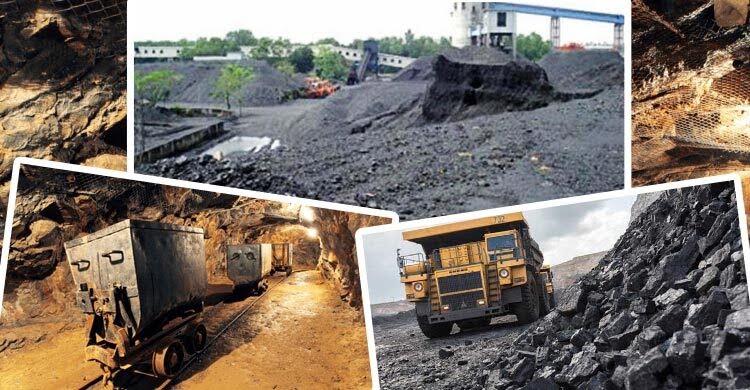
Joynal Abedin।। Energy experts see mineral resources as a potential sector in Bangladesh. To utilize this potential, engineers with technical knowledge are needed in the relevant sector, and continuous research and research institutions are needed to develop people with institutional knowledge. In addition, the application of technology is needed in the exploration and extraction of mineral resources. If these are done as soon as possible, it will be possible to work for the welfare of the country and the people by extracting the vast mineral resources hidden under our soil, mountains and water, especially oil, gas, methane, coal and other mineral resources. Currently, a huge amount of gas is being obtained and extracted in the island district of Bhola, the hilly region of Sylhet, Subarnachar and Brahmanbaria in Noakhali.
Experts in the country’s energy and mineral resources say that if exploration is carried out in the Bay of Bengal, islands and other rivers of the country, there is a possibility of finding a huge amount of mineral resources in the near future. Therefore, if more efforts are made in the exploration and extraction of mineral resources, it can be a major source of foreign exchange income for the country. Again, it is possible to solve the ongoing energy crisis with these and even ensure fire safety. According to statistics, there are 10 types of mineral resources in the 16 districts of the country. These include – coal, peat, hard rock, ordinary stone or stone mixed with sand, silica sand, plain soil, mineral sand, limestone, metallic minerals and iron ore.
The Geological Survey of Bangladesh (GSB) is the only organization in the country for the exploration and research of natural resources. According to their estimates, the value of the country’s naturally-occurring mineral resources is more than 3.26 trillion (3 lakh 26 thousand crore) dollars. In Bangladeshi currency, its amount is 341.97 trillion (3 crore 41 lakh 97 thousand 300 crore) taka. According to the Mineral Resources Development Bureau (BMD), among the significant mineral resources discovered in the country, coal, hard rock, ordinary stone or sand mixed stone, silica sand and plain soil are extracted. There is mineral sand in the rivers and coastal areas of Cox’s Bazar, Maheshkhali, Kutubdia, Jamuna and Brahmaputra rivers. There is also valuable mineral sand in the big rivers. There is not enough initiative to extract these mineral sands. However, some plain soil is being extracted locally. Some glass sand is also being extracted.
The monetary value of the mineral resources discovered in the country is basically a conceptual number obtained from the reserves. If a feasibility study is conducted, not only will the amount of mineral resources increase, but also the exact size, shape and type of these resources will be available. In addition, it will be possible to determine the actual monetary value of the resources according to the market price. The Geological Survey of Bangladesh (GSB) is the discoverer of most of the country’s mineral resources. It is necessary to increase further exploration and research of mineral resources. For this, adequate financial allocation is required for exploration and research work. However, the annual allocation for this is only less than five crore taka. At least one billion taka is required to be allocated every year for the exploration and research of natural resources. In addition to the financial allocation, it is also important to resolve the crisis of GSB’s state-of-the-art equipment and transportation.
So far, GSB has discovered 9 types of mineral resources in the country, of which only coal has 7,803 million tons. Among the coal fields discovered by GSB, only coal is being extracted from Barapukuria. 525 MW of electricity is being generated with the extracted coal. Feasibility studies have been completed for the Dighipara and Khalashpir coal fields. Due to the deep location of the Jamalganj coal field, it is not possible to extract coal from here. However, in the future, it can be extracted using the UGC method or in the form of coal bed methane based on demand. In addition, there are potential reserves of peat coal of about 700 million tons. There are 3,527 million tons of limestone. At $30 per ton, this amount stands at $908.1 billion. There are 201 million tons of hard rock, whose financial value is $5.42 billion. The value of 230 million tons of plain soil is $29.9 billion. There are 5.117 billion tons of glass sand, worth $61.4 billion. 2.22 billion tons of gravel are worth $33 billion. And 625 million tons of iron ore are worth $68.8 billion.
According to the data, the districts rich in mineral resources in the country include Sylhet, Sunamganj, Moulvibazar, Habiganj, Panchagarh, Lalmonirhat, Dinajpur, Rangpur, Joypurhat, Netrokona, Mymensingh, Sherpur, Cox’s Bazar, Comilla, Bandarban and Khagrachari hill districts. Of the 5 coal fields, Barapukuria in Dinajpur was discovered by the Geological Survey of Bangladesh (GSB) in 1985. It has coal reserves of 390 million tons. Dinajpur Dighipara coal mine was discovered by GSB in 1995. It has 706 million tons. Dinajpur’s Phulbari coal mine was discovered in 1997. It has 572 million tons of coal reserves. Apart from this, Jamalaganj, Joypurhat, a coal mine discovered by GSB in 1959, has 5450 million tons of coal reserves.
There is a Madhyapara hard rock mine in Parbatipur, Dinajpur. And there are 8 ordinary stone or sand mixed stone quarries in Sylhet, 2 in Sunamganj, 19 in Panchagarh, 11 in Lalmonirhat and 10 in the hill district of Bandarban. In these places, there is a total area of 1966 hectares of stone or sand mixed stone. Apart from this, there is silica sand – 3 in Sylhet, 52 in Moulvibazar and 23 in Habiganj. In these places, there is silica sand in an area of 332 hectares.
According to the Bureau of Mineral Resources Development (BMD), there may be many types of mineral resources in the hilly region, but more studies are needed to determine the potential of what types of minerals are there. The media reports many accidents in coal mining in different countries of the world, including China, but the good news is that there are no such accidents in coal mining in Bangladesh. Therefore, coal can be mined at a higher rate. The amount of coal mining in our country is low. Ordinary sand is also a mineral resource, and sand generates several thousand crores of taka every year. According to GSB information about limestone reserves, the largest limestone reserves in the country are in the northern district of Naogaon. There are more than twenty-five thousand million tons of limestone reserves in Tajpur, Badalgachi, and Bhagwanpur in the district. Apart from this, there are 270 million tons of limestone reserves in Joypurhat Sadar of Joypurhat district, 59 million tons in Panchbibi Upazila, 17 million tons in Baghalibazar of Sunamganj, 12.9 million tons in Tekerghat and 12.9 million tons in Lalghat.
There are 125 million tons of valuable plain soil in Madhupur of Tangail, 68 million tons in Madhabpur of Habiganj, and 25 million tons in Bijoypur of Netrokona. The organization reported information on huge reserves of gravel in six districts of the country. The total reserves of gravel in these districts are 2.2 billion tons. There are 650 million tons of iron ore reserves in Hakimpur of Dinajpur. In addition, there are more than 3,200 million tons of glass sand reserves. Energy Advisor Dr. Faozul Kabir Khan had earlier said that the government also has information about the bright potential of the country’s mineral resources. He also said that the government is taking various steps to utilize this potential. We expect visible progress in taking necessary initiatives and implementing them by emphasizing the potential in the combustion and mineral resources sectors. If these are implemented, it will solve the energy crisis in the country and usher in a new era in economic development and employment.